

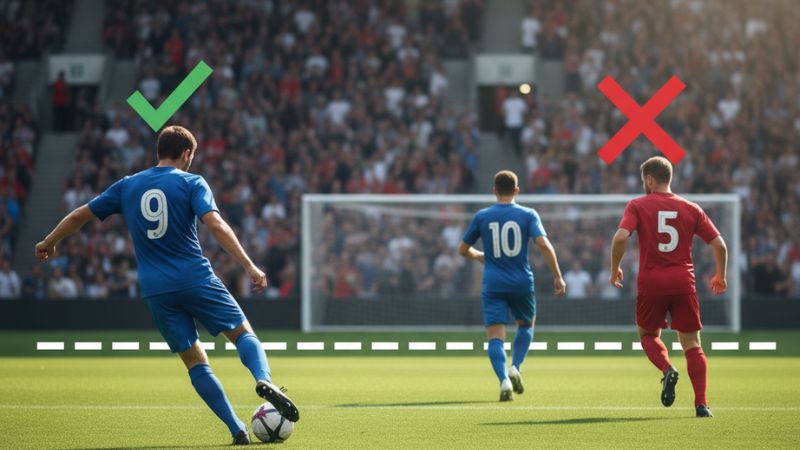

How Does the Offside Rule Work in Football – Football, or soccer as it’s known in some countries, is a sport loved by millions around the world. While most fans enjoy the thrill of goals and saves, one rule often confuses both newcomers and experienced viewers alike — the offside rule. Understanding this rule is essential for appreciating the flow and strategy of the game.
What is the Offside Rule?
The offside rule is designed to prevent players from gaining an unfair advantage by staying close to the opponent’s goal. Essentially, a player is in an offside position if they are nearer to the opponent’s goal line than both the ball and the second-last defender when the ball is played to them.
However, being in an offside position does not automatically mean a player commits an offense. The referee only penalizes a player if they become actively involved in play from that position.
Key Points to Understand Offside
Here are the most important aspects of the offside rule:
1. Player Position
A player is considered offside if they are in the opponent’s half of the field and ahead of the second-last defender at the moment the ball is passed to them.
2. Active Involvement
A player is penalized only if they interfere with play, gain an advantage, or obstruct an opponent while in an offside position. Simply standing near the goal without affecting play is allowed.
3. Exceptions to the Rule
- A player cannot be offside from a goal kick, throw-in, or corner kick.
- Offside is judged at the exact moment the ball is played, not when it is received.
4. Role of the Referee and VAR
Modern football often uses Video Assistant Referee (VAR) technology to review tight offside decisions. VAR helps referees make accurate calls in situations where a player is only marginally offside.
Why the Offside Rule Matters
The offside rule encourages teamwork, strategy, and fair play. Without it, attackers could simply “goal-hang” near the opponent’s goal, reducing the skill and excitement of the game. Coaches design plays around timing runs and positioning to exploit defenses without breaking the offside rule.
Tips for Fans to Spot Offside
Even for seasoned football fans, spotting offside can sometimes be tricky. The game moves quickly, and offside decisions often depend on split-second timing. Here are some tips to help you recognize offside situations more easily:
1. Watch the Second-Last Defender
A simple way to judge offside is to keep an eye on the second-last defender, who is usually the last outfield player standing between the attacker and the goalkeeper. The key is that the attacking player must be level with or behind this defender when the ball is played to them. If they are ahead of this line, they are in an offside position.
Example: If the second-last defender is near the penalty area and a forward receives a pass just beyond them, that forward may be offside. Observing the defenders’ positioning can help you anticipate these moments.
2. Focus on the Moment the Ball is Played
Many fans make the mistake of looking at when the player receives the ball, but offside is judged at the exact moment the ball is played. This is why a player who seems offside when receiving the ball might actually be onside if they were level with the defenders when the pass was made.
Tip: Watch the pass, not the reception. This subtle difference can change your understanding of an offside call entirely.
3. Look for Active Involvement
Being in an offside position doesn’t automatically result in a foul. The player must be actively involved in play. This includes actions such as:
- Interfering with an opponent’s movement
- Attempting to play the ball
- Gaining an advantage from their position
Simply standing near the goal without affecting the play does not count as offside. Understanding this helps fans avoid confusion when watching high-paced matches.
4. Consider the Whole Team Movement
Offside is also about timing and coordination. Pay attention to how attackers time their runs relative to defenders. Teams often use “offside traps” to catch attackers, so observing team formations and movement can give you a better understanding of the strategy behind each offside call.
5. Use Replays and VAR as Learning Tools
In modern football, Video Assistant Referee (VAR) is used to review close calls. Watching replays can be educational for fans, helping you see exactly why a player was called offside and how fractions of a second and tiny positional differences matter.
By applying these tips, you’ll start to notice the tactical brilliance behind offside plays and gain a deeper appreciation for the game. Spotting offside becomes less of a guessing game and more of an engaging puzzle, making every match more exciting to watch.
Final Thoughts
While the offside rule can seem complex at first, it is a cornerstone of football’s fairness and strategy. By learning the key points and watching games carefully, fans can easily grasp when a player is offside and why the referee makes that call.
For those who love following matches and tracking scores, platforms like Home of football results (บ้านผลบอล) provide up-to-date information, helping fans stay connected with all the latest action.